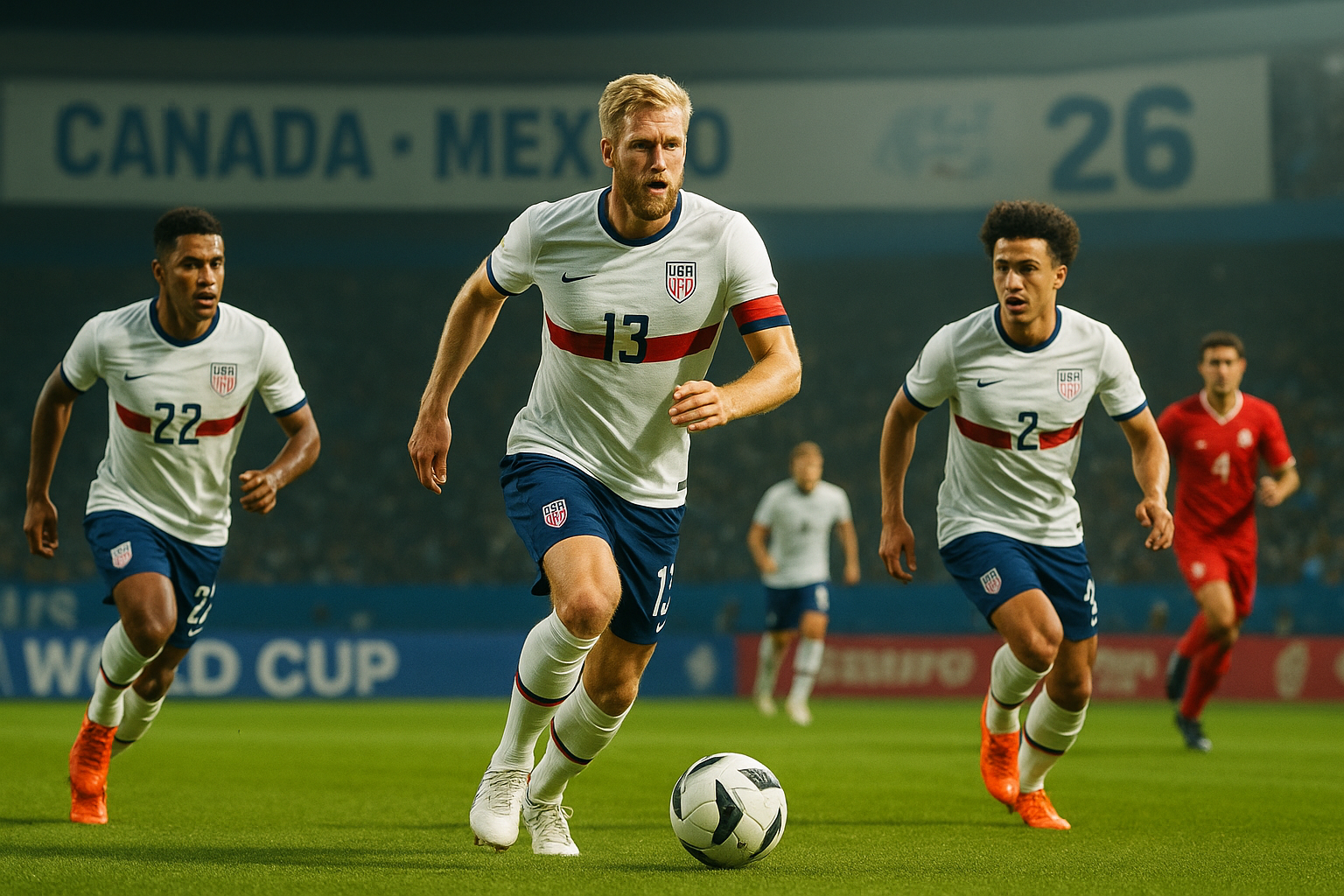
USMNT Shifts to Three-Center-Back Shape for 2026 World Cup
USMNT Shifts to Three-Center-Back Shape for 2026 World Cup
The United States men’s national team is expected to deploy a back three at the 2026 World Cup, a tactical shift from the 4-3-3 formation the squad used at the 2022 tournament in Qatar. The change reflects both the personnel available to head coach Mauricio Pochettino and specific defensive considerations surrounding veteran captain Tim Ream, who started both pre-tournament friendlies against Senegal and Germany on the left side of the three-man defensive line.
Wing backs Antonee Robinson and Sergiño Dest are central to how the system is designed to function. Robinson offers the engine to press high and recover, while Dest is expected to operate further up the field and contribute to the attack before tracking back when required. The structure allows the two wide center backs to engage more aggressively when the team holds possession but collapses into a back five when the opposition applies sustained pressure in a low-block scenario. Placing Ream, 38, as a left-sided center back rather than a wide fullback gives him positional cover against pace-oriented wide attackers – a vulnerability exposed in the Senegal friendly when Ream was left to cover space alone after Robinson lost the ball high up the pitch, a sequence that led to Sadio Mané’s opening goal.
At the 2022 World Cup, a back four was the more logical choice because Tyler Adams, Weston McKennie and Yunus Musah collectively provided defensive coverage across midfield that normally requires an additional outfield player. Adams in particular anchored the structure, giving the team confidence to sit with only two central defenders. That dynamic has shifted: with Robinson and Dest capable of operating as genuine attacking outlets from deep positions, the three-center-back shape maximizes their influence without leaving the defensive line structurally exposed. Adams remains in the squad, and his capacity to read and intercept play continues to offer the midfield a layer of protection that makes the back three viable against higher-quality opposition.
The United States open the 2026 World Cup against Paraguay, with the tournament co-hosted across the United States, Canada and Mexico. Whether Pochettino maintains the back three across all group-stage fixtures or adapts tactically to individual opponents remains to be seen, though the pre-tournament preparation suggests the three-center-back system is the planned starting point rather than a contingency option.